Rewind to the 90s, often dubbed the Golden Age of surf films. The 70s and 80s had their share of groundbreaking work, but never had there been such a surge of skilled filmmakers chronicling the exploits of surfing’s elite. Taylor Steele was pioneering with Momentum, Sonny Miller was making gems for Rip Curl, while Don King and Jeff Hornbaker were hitting their creative peaks. Then there was Jack McCoy, whose knack for blending technical wizardry with trippy, artistic flair produced a series of iconic films for Billabong.
Among those hits, the 1995 Billabong Challenge stands out as a trailblazer. The premise was bold: drop eight of the world’s best surfers into the remote desert of Western Australia with $50,000 at stake and a two-week window to score. It may not sound radical by today’s standards, but back then, when comps were often held at lackluster beach breaks, this set the stage for the Dream Tour we know today. And what a roster—Sunny Garcia, Mark Occhilupo (Occy), Kelly Slater, Rob Machado, Johnny Boy Gomes, Luke Egan, Brendan Margieson (Margo), and local powerhouse Paul ‘Antman’ Paterson. Each brought a distinct style and unmatched personality. With Wayne ‘Rabbit’ Bartholomew at the helm as contest director (foreshadowing his later ASP leadership), it was a lineup stacked with legends.
The surfers may have been camped out at Gnaraloo, a spot easily recognizable to those in the know, but the unwritten rule of not naming breaks kept things subtly respectful. The film itself serves as a time capsule of the era’s surf culture. There were no polished WSL set-ups—just tents, battered 4WDs loaded with boards, and camaraderie under a sun that scorched everything in sight. The authenticity is palpable; you can almost feel the grit of the desert wind and hear the drone of flies as they waited out lulls.
McCoy’s direction shines throughout. He masterfully contrasts the haunting, organic hum of the didgeridoo, echoing the desert’s spirit, with a high-energy freesurf montage backed by the Beastie Boys. Always adept at weaving surfing with lifestyle, McCoy used the downtime to build anticipation while showcasing the surfers’ personalities. The result was candid, unscripted moments that today’s media-trained athletes rarely offer. Shot on 16mm film, with dynamic land and water angles, McCoy’s unique touch added a layer of surreal beauty to the project.
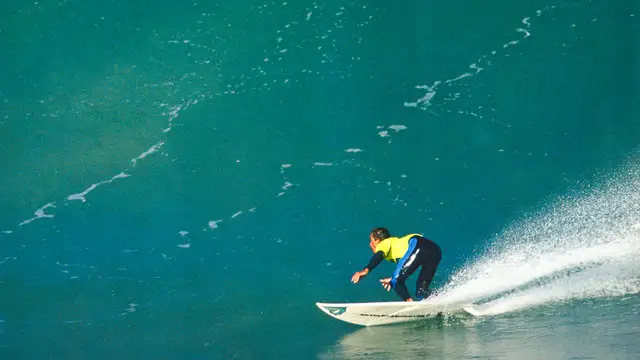
And then there’s the surfing. From Slater’s standout session at what became known as ‘Slater’s Right’ to the high-octane contest finale at pumping Gnaraloo, it’s impossible not to get stoked. Surfing has evolved, with aerials and mind-bending maneuvers now commonplace, but the sheer elegance of those drawn-out lines on slender pintail boards is timeless. The smooth carves and effortless spray—they still inspire today. After watching, you might find yourself itching to order a 6’3” pintail with channels.
The showdown’s climax featured a 90-minute heat set to Yothu Yindi, with Machado, Slater, Johnny Boy, and a revitalized Occy—fresh from a self-imposed hiatus—trading flawless four-to-six-foot barrels. Machado’s silky style edged out Slater, earning him the $20,000 winner’s check. The post-comp celebration, soaked in beer and good vibes inside the tents, was the perfect end to an unforgettable 45 minutes of surf cinema.
Rather than focusing solely on competition, McCoy and the crew gifted us a film that made surfers dream of adventure and the road less traveled. For that reason alone, the Billabong Challenge holds its place as a classic.